

The Tai Chi Walk: Building Balance, Strength, and Calm from the Ground Up
One of the most powerful — and often overlooked — practices in Tai Chi is the Tai Chi walk. At first glance, it may look like “just walking slowly,” but in reality, it is a deeply intentional movement practice that trains the body, brain, and nervous system all at once.
The Tai Chi walk begins from the ground up, teaching us how to shift weight safely, root through the feet, and move with awareness and ease.
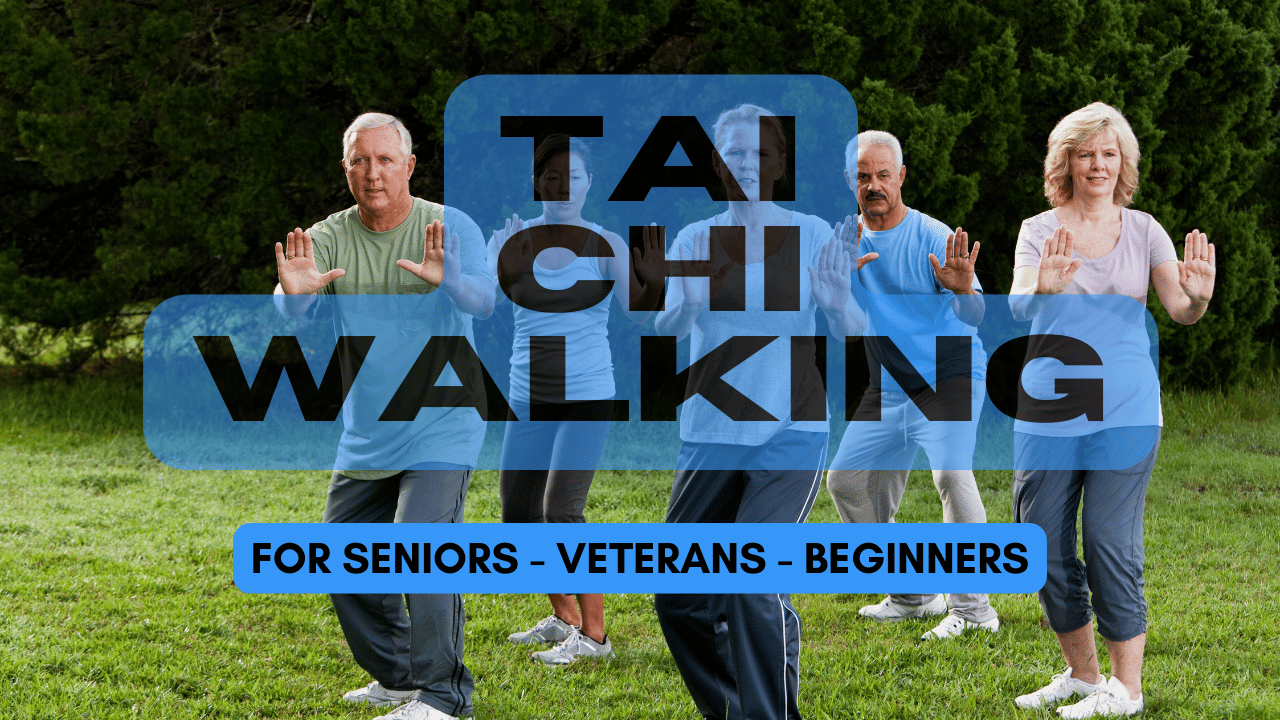
What Is the Tai Chi Walk?
In the Tai Chi walk, we move through a series of small, deliberate steps:
- Feet begin together
- Knees gently bend as the weight settles downward
- One foot opens to about 45 degrees
- The body spirals through the leg
- A short step places the heel down, toes forward
- Hips turn forward into a front stance
- Weight transfers smoothly from back leg to front leg
In the final position, about 70% of the weight rests on the front leg, while the back foot stays grounded at a 45° angle. The movement repeats on both sides, creating a steady rhythm of shift → step → turn → transfer.
This slow, mindful pace is where the magic happens.
Physical Benefits of the Tai Chi Walk
🦵 Stronger Legs and Healthier Joints
The Tai Chi walk gently strengthens:
- Ankles
- Knees
- Hips
- Thighs and glutes
Because the steps are short and controlled, the joints learn to support weight safely without strain, making this practice especially valuable for aging bodies.
⚖️ Improved Balance and Fall Prevention
Each step trains single-leg balance and controlled weight shifting. Over time, this improves proprioception — your body’s ability to sense where it is in space.
This is one of the reasons Tai Chi is widely recommended for:
- Seniors
- People recovering from injury
- Anyone concerned about stability and confidence while walking
🌱 Rooting and Grounding
A key Tai Chi principle is often described as:
“Feet rooted into the ground, bottom heavy, top light.”
The Tai Chi walk reinforces this by teaching the body to:
- Feel stable and supported from the feet
- Release unnecessary tension in the upper body
- Move from a centered, grounded place
This grounding effect can be both physically stabilizing and emotionally calming.
Brain and Nervous System Benefits
🧠 Brain–Body Coordination
The Tai Chi walk is not automatic movement. It requires:
- Attention to sequencing
- Awareness of foot placement and hip rotation
- Coordination between upper and lower body
This kind of mindful movement supports brain health and neuroplasticity, helping keep the mind engaged and adaptable.
🌬️ Nervous System Regulation
The slow, rhythmic pace of Tai Chi walking naturally supports the parasympathetic nervous system — the “rest and restore” mode of the body.
Many people notice:
- Reduced stress
- Calmer breathing
- A sense of being more centered and present
It’s movement that soothes rather than overstimulates.
Energetic and Meditative Qualities
From a Tai Chi and Qigong perspective, the spiraling through the legs and smooth weight transfer helps encourage healthy energy (Qi) flow throughout the body.
The walk becomes a form of moving meditation:
- Focused, but relaxed
- Grounded, yet light
- Strong, without force
Why the Tai Chi Walk Matters
The Tai Chi walk teaches us how to move through life more safely and gracefully, not just how to exercise. Every step becomes practice for:
- Walking with confidence
- Turning without losing balance
- Moving with awareness rather than habit
Whether you are new to Tai Chi or have practiced for years, returning to the Tai Chi walk is always worthwhile. It reminds us that stability, strength, and calm all begin at our feet.
 Gentle Yoga and Tai Chi with Gail
You must be logged in to post a comment.