For those of you taking my online beginning yoga classes, I’ve include a few fan favorites here for you to enjoy. Additionally, a Yoga Nidra Meditation & Chair Tai Chi with Gail PB.
Hello, I’m providing some links to previously recorded classes, in case you need to take another class with me, prior to us coming together next Wednesday. I teach regularly on Wellness Living Online Studio classes for Veterans Yoga Project. Enjoy!
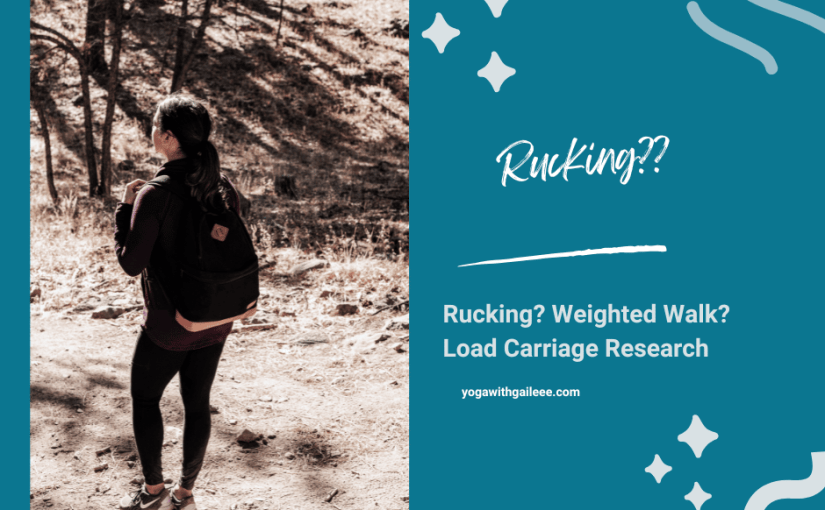
When I was 15 years old, I was able to go on a 10 day backpacking trip with other youth from the Methodist Church from the state of Oklahoma. Every year one to two groups were organized to backpack either in the state of Colorado, or in Europe.
We’d be told to go walking with a weight backpack as part of our training to get ready for this summer activity. Little did I know this activity would bring me full circle to what I’m doing these days.
We gathered in the city somewhere (then known as either Edmond, or Oklahoma City) gathered from all the different places in the state of Oklahoma. We each had our own sleeping bags, tents, eating gear, freeze dried food stores, personal clothing and belongings. Any where from 30 – 45 pounds each person was carrying.
We took a school bus, and drove to Durango, Colorado. Spent the night in a Methodist Church, and the next day took the Silverton train from Durango.
We were left off about two hours from where we departed and started our 10 day trip into the mountains. We used the horse trails, and had a specific route that we were taking.
A lot of the boys who were on this trip, were using this trip as a conditioning trip for their football practices. Seemed a bit extreme to me at the time, but looking back it made sense.
I remembered I was quite skinny back then, and this also had me lose a lot of weight, as we were in the high altitude, carrying heavy loads, walking 3-7 miles a day.
I did something like this again in my college years, taking a geomorphology camp course. We were measuring the effects of glacial freezing and refreezing on specific rock formations. This was in the southern part of Colorado.
I once again did the backpacking trip, but as a counselor instead of a participant. Same method, walking with a lot of weight in a backpack to train for the backpacking event. Again, found that there was some weight loss due to this vigorous activity.
🧠 1. Human “load carriage” research (military & biomechanics)
A large body of research comes from military physiology, where carrying loads over distance is a core functional demand.
Key findings
Humans are exceptionally efficient load carriers compared to other mammals
Carrying weight increases:
oxygen consumption (VO₂)
heart rate
energy expenditure
The heavier the load and faster the pace, the greater the metabolic demand
👉 Studies consistently show that walking with load provides both aerobic and muscular stimulus simultaneously, confirming what your source described.
Example findings
Adding 20–40% of body weight significantly increases metabolic cost
Load carriage activates:
trunk stabilizers
hip extensors
calves
It improves functional strength and endurance together
❤️ 2. Energy expenditure & cardiovascular benefits
Several controlled studies have compared walking vs. walking with added weight.
Results across studies
Weighted walking:
burns more calories per mile than normal walking
increases cardiovascular demand without needing higher speed
This makes it accessible for:
older adults
people who cannot run
rehabilitation populations
This supports the idea of rucking as a “low-impact cardio + strength hybrid.”
🦴 3. Bone density and skeletal loading
Weighted vest studies (especially in postmenopausal women and older adults) show:
Load-bearing walking helps maintain or increase bone mineral density
The added load stimulates osteogenic (bone-building) response
This is especially relevant for aging populations concerned about:
osteoporosis
frailty
fall risk
🔥 4. Body composition and fat loss research
There are small but meaningful studies showing that weighted load walking can:
Increase fat loss while preserving lean muscle
Improve resting metabolic rate maintenance after weight loss
One pilot study in older adults with obesity found that wearing a weighted vest during daily activity helped prevent weight regain compared to diet alone.
(These are small studies, but promising.)
🧍 5. Posture, gait, and stability
Biomechanics research shows that load carriage:
changes gait mechanics (shorter stride, more stability)
increases engagement of core stabilizers
improves balance and proprioception
This aligns with your intuitive observation about needing to move like a “packed mule” with more control and awareness.
🪖 6. Injury risk & safety findings
Research from military populations shows:
Very heavy loads (>45–50% body weight) increase injury risk
Moderate loads (10–30% body weight) are generally well tolerated
Compared to running, load walking has a lower injury rate when loads are reasonable
This supports the recommendation: 👉 start light, progress gradually
🧓 7. Aging & functional fitness
Emerging research suggests weighted walking may:
improve functional capacity
support daily life strength
enhance ability to carry groceries, grandchildren, etc.
This makes it particularly relevant for:
seniors
rehabilitation
longevity-focused movement practices
🧭 Big-picture scientific takeaway
Across multiple fields, research supports that walking with weight is a uniquely effective human movement pattern that:
✔ combines strength + cardio ✔ improves bone and muscle health ✔ supports fat loss ✔ enhances functional capacity ✔ reflects natural human evolutionary movement
In other words:
👉 science largely confirms what your speaker said— this is something humans evolved to do.
🔬 Key Named Studies on Load Carriage / Weighted Walking
1. Military Load-Carriage Physiology Research
These are some of the most robust and long-running studies, because militaries rely heavily on rucking.
📘 Knapik et al. (2004, 2012 reviews)
Authors: Joseph J. Knapik et al.
Focus: Physiological, biomechanical, and injury effects of carrying loads
Findings:
Energy cost increases linearly with load weight and speed
Heavier loads significantly increase joint stress and injury risk
Recommended loads generally ≤30–40% body weight for sustained marching
These are considered foundational reviews in the field of load carriage physiology.
📘 Pandolf et al. (1977) – Load Carriage Equation
Authors: K.B. Pandolf, B. Givoni, R.F. Goldman
Contribution: Developed the Pandolf equation, still used to estimate metabolic cost of walking with loads
Shows how body weight, pack weight, terrain, and speed determine energy expenditure
📘 Soule & Goldman (1972)
One of the earliest controlled studies on energy cost of walking with loads
Confirmed that carrying weight substantially increases oxygen consumption
2. Bone Density & Weighted Vest Walking
📘 Snow et al. (2000)
Study:“Exercise with weighted vests and bone mineral density in postmenopausal women”
Findings:
Weighted vest walking combined with jumping improved hip bone density
Showed mechanical loading stimulates bone adaptation
📘 Shaw & Snow (1998)
Demonstrated that impact + loading improved femoral neck bone density
📘 Sinaki et al. (2002)
Focus: spinal osteoporosis and posture exercises
Found that back-extensor strengthening with loading reduced fracture risk and improved posture
Found higher calorie expenditure per distance compared to unloaded walking
4. Functional Strength, Balance & Gait
📘 Attwells et al. (2006)
Studied biomechanics of load carriage
Found:
Shorter stride length
Greater trunk stabilization demand
Increased activation of core and hip stabilizers
📘 Harman et al. (2000)
Focus: soldier load carriage performance
Found that progressive load training improved:
March endurance
Strength
Work capacity
5. Fat Loss & Body Composition (Field Studies)
📘 Alaska Backcountry Hunter Study (uncontrolled field observation)
Participants carried heavy packs for extended periods
Result:
Significant fat loss
Minimal muscle loss or slight gain
Though small sample size, it supports the idea of rucking as a fat-loss-efficient modality
🧠 What These Studies Collectively Show
Across decades of research:
✔ Walking with weight increases cardiovascular demand ✔ It provides simultaneous strength + endurance stimulus ✔ It enhances bone loading and density (with impact or consistency) ✔ It recruits postural and stabilizing muscles ✔ It can support fat loss with preserved lean mass ✔ But load must be progressed gradually to avoid injury
⚖️ Safe Load Guidelines From Research
Common evidence-based recommendations:
Beginners: 5–15% body weight
Moderate training: 15–25% body weight
Upper safe range: ≤30–40% body weight
Absolute practical cap often suggested: ~50 lb
These align with military and sports science literature.
Places where I teach Yoga….. back in 2002….. [ Citizen’s HealthPlex Group Exercise Schedule | GymX Group Exercise Schedule | Detar Health and Fitness Center Aerobic Schedule ]
Yoga Training – YogaFit ™ Level I, Level II, YogaFit™ for Kids, YogaButt™, YogaAbs/YogaBack, YogaFit™ for Seniors. Also Katherine Robert’s Yoga for Golfers™ , also I’m up to date on my My Red Cross Adult CPR, First Aid and AED training..
My interest in Yoga began back when I was taking fitness courses along with the computer courses at Victoria College. I had taken the Weight Training, Walking, Karate and Physical Fitness classes. The college wasn’t offering any Yoga classes and through a survey, myself and others requested that Yoga be a fitness class offered at VC (there wasn’t a facility in town that offered any Yoga classes that fit my schedule). The first time that Yoga was offered through the college I took it. As with any other fitness class at the college several things happened.
In order for one to see if they are indeed making strides towards their fitness goals, you need to make assessments and measurements. At the beginning of the semester we measured weight, height, circumference measurements along the calves, thighs, hips, waist, chest and upper arms. A crunch test, along with a push-up assessment was done. Two fat body measurements were done-one with the pincher calipers and the other with an electronic fat body calculator. A Cardio endurance one mile walk (the Rockwell test) was also performed. Lastly a sit/stretch measurement was conducted. The assessments was a good portion of our grade. At the end of the semester all of these assessments were done to “measure” our fitness level, due to taking the Yoga class.
Not only was I feeling better and well rested, from my initial assessment, I confess that I could only do ONE push-up. Through the learning of the different Yoga poses, practicing, etc., at the end of the course not only did I reduce my body fat percentage, lose inches (and increased inches in my arms/calves), but I increased my number of push-ups to 19 (with my age was finally conducted at “average” fitness) and also increased my flexibility in my sit/stretch measurement. Also I decreased my resting heart rate.
One of the activities that we had to do was to present a Yoga class to the students. We paired up with 2-3 other individuals and selected the Yoga Mountain phase that we were to present to the class. After my 10 minute portion of the presentation the instructor had asked if she could use my Yoga sequences in her classes. (Sure!) She also recommended that I become certified and that I might like to teach YogaFit styled classes. (Perfect, so that I can schedule Yoga classes to fit my schedule!) So that is what I did. I’m currently trained in Level I and Level II, Seniors (Chair Yoga), YogaFit™ for Kids, YogaButt ™, YogaAbs/YogaBack by – YogaFit™ , and I just finished a workshop training in Yoga for Golfers™ by Katherine Roberts (see Yoga For Golfers™ web site!!) .
Back in 2004 was teaching Yoga classes at GymX, Citizen’s HealthPlex and Detar Health and Fitness Center, and a bit of teaching at Busby Dance Center, all from Victoria Texas.
On another interesting note, during this entire time that I was taking the college class, getting certified, etc., I told my 75 year old mom how I so enjoyed the Yoga. She started taking the Yoga classes offered at her local YMCA. Immediately her balance was better for her, her flexibility and range of motion in her arms increased, and whenever she took her class her blood pressure lowered (she takes medicine for her blood pressure). Balance and flexibility were some of her concerns and to get a bit lowering on her blood pressure was just a bonus. Now mom is a pretty active person. She swims laps twice a week at the YMCA and also tries to walk at least 45 minutes 3 times a week. Not only that but she bowls a mean 160 average! Now isn’t it interesting that she noticed changes in her body when she added Yoga to the mix.
Additionally for me, I’ve had bunion surgery on my right foot and had a fourth degree sprain on my left foot, so I have some “foot” issues that I’m always concerned about. With the various balancing poses that you do in Yoga, I’ve become more confident on my “footing” and balance. I never thought I’d be able to do the “Tree and Eagle” poses, much less the “Dancer” pose (I can do them now!). Its been a work in progress, but I’m very pleased with the results!
Collected here are some comments from students who have taken my classes:
“feeling very relaxed after a session”
“my pain in my back has eased up considerably”
“I sleep better at night”
“I feel energized”
“I need your class to help my legs and my back feel better”
“When I don’t come to class, my stress levels become very high”
“I’m ready for a nap, I’m so relaxed”
“I’m not having any spasms in my left leg”
“I can manage my stress better”
I’m almost tempted by the type of comments that I get from my students to call my class “Yoga for Backs”.
So take a Yoga class….you never know what benefit it may have in store for you!
Active Yoga / Beginning Yoga / Chair Yoga/ Yoga for the Sports Enthusiast – Class Descriptions
Active Yoga – A fitness yoga class uses traditional Hatha yoga poses, in the context of a fitness workout, to make you relax and sweat at the same time. The goal of fitness yoga is the increased strength and stamina you expect from a vigorous workout and the inner peace and tranquility that yoga is famous for. One hour format.
Beginning Yoga – This class introduces students to fundamental yoga postures, including stretching, strengthening, balance and alignment in the postures. Emphasis is on the standing, seated, and relaxation poses. Additionally, this class, uses a sequence of yoga postures to strengthening your core muscles, which will, in time, help lessen back pain and strengthen your abdominal muscles. Less strenuous than the Active Yoga, the goal is the same increased strength and stamina and in a 45 minute or 1 hour format.
Chair Yoga – This class was designed for those that have trouble getting up and down from the floor. Seated / Standing Chair Yoga poses are modified to the chair and work all parts of the body to improve strength and mobility. The class focuses on mild stretching and breathing exercises designed to promote physical fitness. Forty-five to Fifty-five minute class.
* Beginning Yoga is taught, unless the mix of people are of the intermediate level.
[ Citizen’s HealthPlex Group Exercise Schedule | GymX Group Exercise Schedule | Detar Health and Fitness Center Aerobic Schedule ]
Gaileee in South Texas
Fast forward about 20 years or so….
Moved to the Golden Triangle Area here in southeast Texas. Local cities are Port Arthur, Port Neches, Nederland, Groves, Beaumont, Bridge City and Orange Texas.
Initially taught at both the YMCA of Port Arthur and the W.P. Hebert Wellness and Fitness facility in Beaumont, Texas.
Took my advanced teacher training at the Yoga Institute with Lex Gillan in Houston Texas near the downtown medical center.
Did additional training in adaptive yoga, chair yoga, yoga for Multiple Sclerosis, Yoga for Scoliosis. Adaptive Yoga with Mathew Sanford, Restorative Yoga, Yoga Nidra Meditation, Prenatal Yoga, Childrens and Kids Yoga.
The Kids yoga classes at the Ymca, and at Exygon Health and Fitness were fun classes to teach. I eventually took the kids yoga to the local Mother’s Day Out program at Wesley Methodist in Nederland, Texas. I’m a registered Childrens yoga teacher through Yoga Alliance.
Additionally taught prenatal yoga at Detar Health Center in Victoria Texas, which eventually led me to teach baby yoga for my youngest child and my grandchildren. Used the Itsy Bitsy methodology to teach the baby yoga classes.
Taught officially for the National MS (Multiple Sclerosis) Society, the Lonestar Chapter for over 10 years prior to the pandemic.
Had the opportunity to teach at the local VA, and took Veterans Yoga Project Mindful Resilience Trauma Training, and for the past five years been teaching online for VYP through their various offerings after the pandemic and currently. Taught Chair yoga, gentle yoga, back care yoga, chair tai chi, and beginners standing tai chi.
More recently looked into QiGong and Tai Chi practices for my own personal interest and have become certified in Chair Tai Chi, Tai Chi Ball QiGong, and Beginners standing Tai Chi Yang Style Short Form 12. Teaching the Chair Tai Chi and the Yang Style Short Form online for Veterans Yoga Project.
Got especially interested in yoga for scoliosis, for back care, as I have those challenges, and now teaching a gentle yoga for back care class. More recently online for VYP, but in years past was a popular class, taught weekly at Wesley Methodist Church in Nederland, Texas.
Also became a licensed Zumba Instructor, and teach a seated dance fitness class for the senior population at Lakeside Center in Beaumont Texas. Additionally teach a weekly Chair Tai Chi Ball QiGong with a Splash of Yoga at Lakeside Center.
Updated 2/2026
International Kids Yoga Day. Yearly in April.Chair Yoga for Fall Prevention. Online on YouTube ChannelYoga for Multiple Sclerosis for the National MS Society. Local teacher, Gail Pickens-Barger, teaches adaptive yoga for NMMSChair Tai Chi Certified through MoonWillowTaiChiChair Yoga Dance Instructor – Gail Pickens-Barger – Yoga Vista CertifiedPrenatal Yoga taught in a health clinic in Mongolia!Teaching Yoga Chair Tai Chi with Gail PB
Gentle Yoga, Adaptive Yoga for Multiple Sclerosis, Kids Yoga!
You must be logged in to post a comment.