Chair Yoga for Fall Prevention: A Comprehensive Guide
🌿 Introduction to Chair Yoga
Chair yoga is a gentle, modified form of traditional yoga performed while seated or using a chair for support—making it accessible for individuals with limited mobility, balance concerns, or post‑injury limitations. It emphasizes safety, encouraging practitioners to stay “between the easy and the ouch” by honoring their body’s limits. Through mindful movement, chair yoga improves flexibility, strength, balance, and confidence in daily activity. As AP News reports, it “offers significant benefits such as improved flexibility, strength, balance, and emotional well‑being” and is particularly valuable for fall prevention among older adults (apnews.com).
Why Fall Prevention Matters
Falls are a leading cause of injury among older adults, often resulting in fractures, hospitalizations, and declines in independence (pmc.ncbi.nlm.nih.gov). Chair yoga directly addresses this risk by combining gentle strength and balance work in a safe, supportive setting.
1. Warm‑Up Foundation
A vital warm‑up primes the body and mind for effective practice:
Gentle joint mobilization: Shake arms, bounce knees, roll shoulders and wrists.
Breath awareness: Anchor the session with mindful inhaling and exhaling.
Circulation boost: Circulate blood flow to stiff areas, setting the tone for safety and effectiveness.
2. Breathing Techniques
Conscious breathing deepens the practice and supports relaxation:
Deep belly breathing: Inhale to expand the diaphragm; exhale to engage the core.
Back-of-throat listening: Amplifies breath awareness and focus.
Synchronize breath and movement: Link inhales and exhales to spinal elongation and flexion—for example, during seated Cat‑Cow.
3. Strengthening & Balance Exercises
Adaptable and functional, these exercises support day‑to‑day movement and reduce fall risk:
Arm swings & shoulder lubrications: Strengthen upper body and shoulder joints.
Core engagement: Maintain upright posture during breathing and movement.
Step‑touch drills & foot patterns: Enhance lower‑body coordination and strength.
Research confirms chair yoga builds upper‑ and lower‑body strength, improving functional mobility (ncbi.nlm.nih.gov).
4. Lymphatic Health & Detoxification
Chair yoga supports circulation of lymph—crucial for immune health:
Understanding lymphatic system: A pump‑less system dependent on body movement.
“Big six” drainage techniques: Gentle strokes from jawline, neck, and collarbone towards lymph nodes can reduce stagnation and boost recovery (glamour.com).
Daily flow practices: Light tapping or shaking of limbs promotes detoxification and vitality.
5. Spinal Mobility & Alignment
Strong spine posture and mobility are central to balance and fall prevention:
Seated Cat‑Cow: Alternating spinal arch and round to maintain flexibility.
Pelvic Tilts: Enhance core strength and support the lower back.
Unsupported Twists & Lateral Flexion: Gentle side‑bends and rotations to improve spinal health.
Breath coordination—for example, inhaling on extension and exhaling on flexion—supports form and reduces tension.
6. Mindfulness & Present Moment Awareness
Building mind‑body connection is essential:
Mindful movement: Observe sensations, posture, and alignment without judgment.
Breath‑focused drills: Techniques like “elongated exhale” or pranayama encourage calm and resilience.
Simple rituals: Gentle clapping to stimulate energy, gratitude reflections to foster positivity.
7. Sample Chair Yoga Sequence
Warm‑up (5 min): Arm shakes, shoulder rolls, breath work.
Breathing & spinal flow (5 min): Deep belly breathing, Cat‑Cow with breath.
Seated Clam Shells with Yoga Strap or Stretchy Band: 10 min/day to strengthen hip musculature complex. This is a variation of the side lying mat pilates movement, where, Clamshells—where you lie on your side and open your knee like a shell, exercises targeting hip stabilizers with resistance bands, weights. But in this circumstance we use either therabands or yoga straps, seated on the chiar for this strength builder.
Sit‑to‑stand reps: Aim for 10 controlled transitions to build leg/behind strength.
Walking drills: Use chair support to enhance balance and coordination.
Three‑point step drills: Develop agility and weight‑shift control, better balance and build strength.
9. Support from Research
A 12‑week study in psychiatric inpatients showed increases in strength, flexibility, and reduced fear of falling (yogianatomy.com, pubmed.ncbi.nlm.nih.gov).
A pilot trial in elderly at high fall risk recorded improved sit‑to‑stand scores and reduced fall anxiety, with no adverse events (pubmed.ncbi.nlm.nih.gov).
Meta‑analyses report significant gains in upper‑body strength and lower‑body endurance following chair‑based programs (mdpi.com).
✨ Final Thoughts & Encouragement
Chair yoga offers a powerful, accessible pathway to enhanced mobility, balance, and well‑being. While progress takes time, even short daily practice can produce confidence and reduce fall risk. Embrace the chair as your ally and move with kindness and curiosity. With consistent dedication, you’ll discover newfound stability, strength, and peace.
Gentle Yoga for Low Back Care with Gail Pickens-Barger
Yoga for Sciatica: Poses for Piriformis Syndrome vs. True Sciatica
Sciatica pain can be confusing, frustrating, and—at times—debilitating. But did you know that not all sciatica is the same? There are two primary types: sciatic nerve entrapment (often caused by Piriformis Syndrome) and true sciatica (caused by lumbar nerve root compression). Understanding which one you’re dealing with is essential to practicing yoga safely and effectively.
In this post, we’ll break down the difference between the two types of sciatica and compare yoga poses that are safe and supportive for each. Plus, you’ll get a clear list of poses to avoid, modify, or embrace depending on your condition.
🔍 Understanding the Two Types of Sciatica
1. Sciatic Nerve Entrapment (Piriformis Syndrome)
This type of sciatica occurs when the piriformis muscle (located deep in the buttocks) compresses the sciatic nerve. This can happen when the muscle becomes tight, inflamed, or spasms. It’s especially common in people with postural imbalances, prolonged sitting, or gluteal weakness.
2. True Sciatica (Lumbar Nerve Root Compression)
In this case, the sciatic nerve is compressed at the nerve root as it exits the lower spine. Common causes include herniated discs, spinal stenosis, or degenerative disc disease. This version often includes nerve symptoms that travel down the leg and into the foot.
🧘♀️ Shared Yoga Goals for Both Types of Sciatica
Despite their differences, both forms of sciatica benefit from:
Gentle movement
Supportive hip and spine alignment
Avoiding overstretching of the sciatic nerve
Reducing muscular compression and spinal pressure
✅ Yoga Poses Safe for Both Conditions
These foundational poses are typically safe and beneficial for most people with sciatica:
Knee to Chest Pose
Supta Baddha Konasana (Reclined Bound Angle / Band Aid Pose)
Rolling Bridge Pose
Flowy Cat-Cow
Supported Low Cobra or Half Locust
These poses provide spinal mobility, promote relaxation, and gently stretch and activate muscles without stressing the nerve.
🧘 Yoga for Piriformis Syndrome (Nerve Entrapment)
These poses focus on relieving tension in the piriformis and improving gluteal strength and hip mobility:
Reclined Pigeon
Reclined Lateral Pigeon
Reclined Cow Face Pose
Clam Shell Exercise (great for strengthening outer hips)
Strap-Assisted Piriformis Twist
Lateral Sunbird Stretch
Twist with External Hip Rotation
Viminasana with Rotation
Goddess Pose (wide stance, modified as needed)
🌿 Yoga for True Sciatica (Lumbar Nerve Compression)
These poses emphasize spinal decompression, gentle backbends, and safe movement that doesn’t aggravate the nerve root:
Knees to Chest with Circular Movements
Reverse Pigeon (safer version of traditional pigeon)
Gentle Supine Twist
Crocodile Breathing (laying on stomach with blanket under pelvis)
Salabasana (Low Locust)
Uttanasana (Forward Fold with bent knees)
Mountain Pose (with or without arm engagement)
Wide-Legged Down Dog (bent knees recommended)
⚠️ Poses to Modify or Avoid
Some poses are helpful in one condition but potentially harmful in the other. Here’s a quick comparison:
Pose
Good for Piriformis Syndrome
Good for True Sciatica
Reclined Pigeon
✅ Yes
⚠️ Caution
Reclined Lateral Pigeon
✅ Yes
❌ Avoid
Clam Shell
✅ Yes
❌ Not necessary
External Hip Twists
✅ Yes
❌ Avoid
Forward Fold (Uttanasana)
❌ Avoid
⚠️ Use props and bend knees
Wide-Legged Down Dog
❌ Avoid
⚠️ Modify with bent knees
🧾 Final Thoughts
Yoga can be a powerful tool for managing sciatica—but only when it’s tailored to your body and your specific condition. Whether you’re dealing with piriformis-related nerve entrapment or spinal root compression, choosing the right poses can mean the difference between healing and aggravation.
If you’re unsure which type of sciatica you have, start with the shared safe poses and consult a healthcare provider or qualified yoga therapist.
💬 Share Your Experience
Have you practiced yoga for sciatica relief? What’s helped you the most? Share your story in the comments or ask a question—I’d love to support your healing journey.
💬 Join me online for Gentle yoga for back care on Veterans Yoga Project online studio, every other Wednesday at 1 PM Central Time. Class is free, grab a free account, book the class.
A Full Yoga Class to Help You Move with Confidence
Falls are a serious concern, especially as we age. This full-length guided yoga class is designed to help you feel more stable, confident, and in control of your movement.
In just one session, you’ll work on:
✅ Improving balance and core strength ✅ Enhancing posture and body awareness ✅ Building lower body strength and flexibility ✅ Gaining confidence with guided movement
🎥 Hit play and follow along now: 👉 Yoga for Fall Prevention – Improve Balance & Stability at Any Age
What Makes This Class Special
✅ Designed by an instructor who teaches Veterans ✅ Emphasis on strength, focus, and mindfulness ✅ Chair and wall-supported options throughout ✅ Grounded in practical, functional movement—not flashy poses
Who This Class Is For
Older adults wanting to reduce fall risk
Veterans seeking balance, strength, and calm
Beginners or those recovering from injury
Anyone who wants to feel safer moving through daily life
What You’ll Need
🪑 Two chairs or wall & one chair for support, 🧘 Yoga block, strap or a stretchy band 👚 Comfortable clothes 🕒 About 45 – 60 minutes of quiet time
Let’s Move Together
This class combines mindful movement, strength-building postures, and balance-focused exercises. If you’re looking for a safe, calming practice that meets you where you are—this is it.
💡 Veteran or caregiver? I’ve designed this with you in mind. I teach this same class in-person to Veterans and community members, friends and family, and I’d be honored to share it with you.
Ready to Begin?
👉 Click the video above and join me now. Try practicing 2–3 times a week and notice how your balance and confidence improve.
Missed the Live Class? Join Anytime from Home
Not everyone can make it to class live—and that’s okay. I record every class I teach so that you can practice when it works for you. Whether you’re a busy caregiver, a Veteran managing your own healing journey, or simply prefer flexibility, this full-length yoga session is available on-demand, anytime.
Who This Class Is For
Veterans and civilians alike seeking stability
Adults 55+ wanting to prevent falls
Anyone recovering from injury or instability
Caregivers looking for safe exercises to share
Practice On Your Time
🕒 This class is available 24/7 🪑 Includes options with a chair or wall for support 👣 You can pause, rewind, or revisit any time 💻 Watch on your phone, tablet, or computer
You’re not just watching a video—you’re taking a class, on your time.
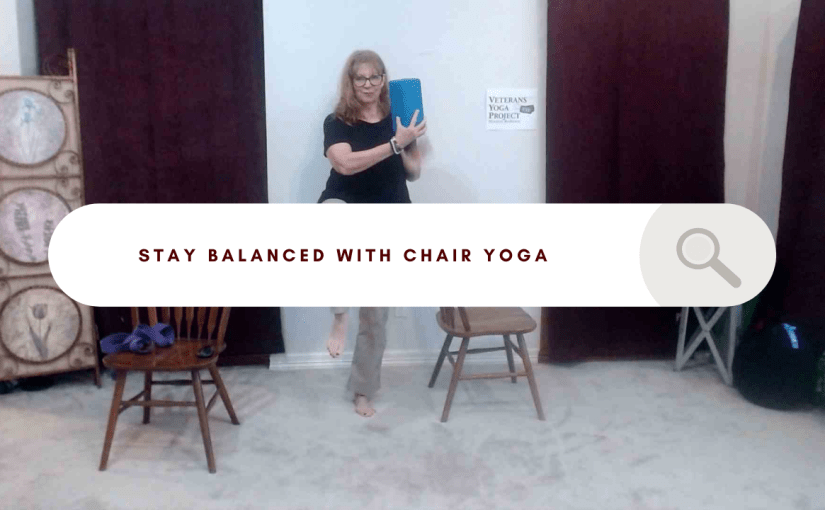
Stay Balanced with Chair Yoga for Fall Prevention. Online Studio class from Veterans Yoga Project on Fridays at 1 PM CST.
Stay Balanced with Chair Yoga
A weekly Chair Yoga class where we use two chairs, a block and a strap to help strengthen the leg/hip musculature. Work on our balance in this class too. A few Chair Tai Chi inspired movements are thrown in for good measure.
Check out this new weekly class on Veterans Yoga Project online studio. It’s FREE. Register, book a class, wait for that link one hour prior to class to come on in and take the class. https://veteransyogaproject.org/vyp-classes now to register, book and wait for this class!




 Gentle Yoga and Tai Chi with Gail
You must be logged in to post a comment.