May you be happy. May you be peaceful. May you be free from suffering.
May no harm come to you. May no problems come to you. May you always meet with success.
May you have the wisdom, courage and understanding to meet and overcome the inevitable difficulties in life.
Art is so immersive and inspirational. Check out the new museum in Houston, TexasThere is no past. Come back to this moment. Right Here Right Now b r e a t h e Meditate on what is Just be present Gail’s Photography – Yoga with Gail social media specialist
Today you are completely, 100%, indefatigably (look it up) focussed on your breath. Imagine the feeling . . . by the seashore, in the woods, on a mountaintop breathing in the crystal clear air. Delighting in a long slow breathe, “drinking in” the Divine all day long . . .
Veterans Yoga Project Live Yoga Classes -Thursdays at 11 AM Central Time, 12 Noon ET and 9 AM PT – Gentle Yoga for Low Back Pain Class.
Streaming Live Online Yoga Classes for Veterans on Veterans Yoga Project Facebook Page
Here’s the latest yoga practice that I’ve done for Gentle Yoga effort over on Facebook Live at #VYPonlinestreamingclasses.
Gentle Yoga for Low Back Care – a Healthy Backs Class for easing back pain. Yoga Teacher, Gail Pickens-Barger, Yoga Vista Low Back Care Specialist. Teaching for the online effort for Veterans Yoga Project.
Five tools for Veterans. Breathing, Mindful Movement, Meditation, Guided Rest & Relaxation and a Gratitude Practice
Yoga with Gail Pickens-Barger, Adaptive Yoga Teacher
Yoga for Veterans – from the Veterans Yoga Project folks!
PTSD Infographic. Yoga for Veterans. Yoga with Gail.
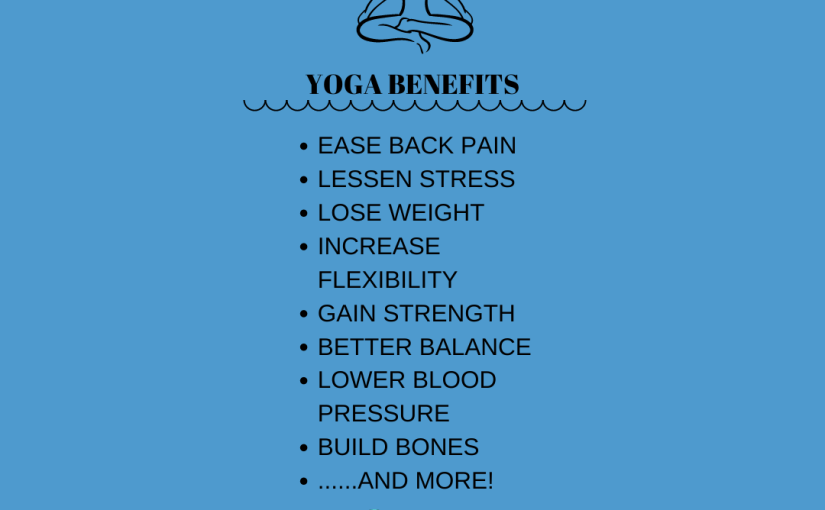
Ease Back Pain, Lessen Stress, Lose Weight, Increase Strength, Flexibility & Build Bones with Gentle Chair Yoga Sequence by Gail Pickens-Barger.
Chair Yoga Fitness with Gail Pickens-Barger. You don’t have to get down on to the floor to get all the benefits of a regular yoga practice.
Adaptive Beginners Yoga Teacher in Nederland & Beaumont Texas. Call for your one-on-one, or small group classes at your place of business. 409-727-3177
Count on Yoga. Looking for a reason to start practicing (or restart your practice)?
1. Flex Time.
Improved flexibility is one of the most obvious benefits of yoga. During your first class, you probably won’t be able to touch your toes, never mind do a back bend. But if you stick with it, you’ll notice a gradual loosening, and eventually, seemingly impossible poses will become possible. You’ll probably notice that aches and pains start to disappear. That’s no coincidence. Tight hips can strain the knee joint due to improper alignment of the thigh and shinbones. Tight hamstrings can lead to a flattening of the lumbar spine, which can cause back pain. And inflexibility in muscles and connective tissues, such as fascia and ligaments, can cause poor posture.
2. Bone Zone.
It’s well documented that weight-bearing exercise strengthens bones and helps ward off osteoporosis. Many postures in yoga require that you lift your own weight. And some, like Downward- and Upward-Facing Dog, help strengthen the arm bones, which are particularly vulnerable to osteoporosis fractures. In an unpublished study conducted at California State University, Los Angeles, yoga practice increased bone density in the vertrebrae. Yoga’s ability to lower levels of the stress hormone cortisol may help keep calcium in the bones.
3. Worry Thwarts.
Yoga lowers cortisol levels. If that doesn’t sound like much, consider these facts. Normally, the adrenal glands secrete cortisol in response to an acute crisis, which temporarily boosts immune function. If your cortisol levels stay high even after the crisis, they can compromise the immune system. Temporary boosts of cortisol help with long-term memory, but chronically high levels undermine memory and may lead to permanent changes in the brain. Plus, excessive cortisol has been linked with major depression, osteoporosis (it extracts calcium and other minerals from bones and interferes with the laying down of new bone), high blood pressure, and insulin resistance. In rats, high cortisol levels lead to what researchers call “food-seeking behavior” (the kind that drives you to eat when you’re upset, angry, or stressed). The body takes those extra calories and distributes them as fat in the abdomen, contributing to weight gain and the risk of diabetes and heart attack.
4. Breathing Room.
Yogis tend to take fewer breaths of greater volume, which is both calming and more efficient. A 1998 study published in The Lancet taught a yogic technique known as “complete breathing” to people with lung problems due to congestive heart failure. After one month, their average respiratory rate decreased from 13.4 breaths per minute to 7.6. Meanwhile, their exercise capacity increased significantly, as did the oxygen saturation of their blood. In addition, yoga has been shown to improve various measures of lung function, including the maximum volume of the breath and the efficiency of the exhalation.
5. Pain Drain.
Yoga can ease your pain. According to several studies, yoga postures (asana), meditiation, or a combination of the two, reduced pain in people with arthritis, back pain, fibromyalgia, carpal tunnel syndrome, and other chronic conditions. When you relieve your pain, your mood improves, you’re more inclined to be active, and you don’t need as much medication.
6. Connective Tissue.
As you read all the ways yoga improves your health, you probably notice a lot of overlap. That’s because they are intensely interwoven. Change your posture and you change the way you breathe. Change your breathing and you change you nervous system. This is one of the great lessons of yoga: Everything is connected – your hipbone to your anklebone, you to your community, your community to the world. Such interconnection is vital to yoga. This holistic system simultaneously taps into many mechanisms that have self-perpetuating and even multiplicative effects. Synergy may be the most important way of all that yoga heals.
7. Joint Account.
Each time you practice yoga, you take your joints through their full range of motion. This can help prevent degenerative arthritis or mitigate disability by “squeezing and soaking” areas of cartilage that normally aren’t used. Joint cartilage is like sponge; it receives fresh nutrients only when its fluid is squeezed out and a new supply can be soaked up. Without proper sustenance, neglected cartilage can eventually wear out like worn-out brake pads, exposing the underlying bone.
8. Flow Chart.
Yoga gets your blood flowing. More specifically, the relaxation exercises you learn in yoga can help your circulation, especially in your hands and feet. Yoga also gets more oxygen to your cells, which function better as a result. Twisting poses are thought to wring out venous blood from internal organs and allow oxygenated blood to flow in once the twist is released. Inverted poses, such as Down Ward Facing Dog, Standing Straddle Splits, Headstand, Handstand and Shoulderstand, encourages venous blood from the legs and pelvis to flow back to the heart, where it can be pumped to the lungs to be freshly oxygenated. Yoga also boosts levels of hemoglobin and red blood cells, which carry oxygen to the tissues. And it thins the blood by making platelets less sticky and by cutting the level of clot-promoting proteins in the blood. This can lead to a decrease in heart attacks and strokes since blood clots are often the cause of these killers.
9. Heart Start.
When you regularly get your heart rate into the aerobic range, you can lower your risk of heart attack and relieve depression. While not all yoga is aerobic, if you do it vigorously or take flow or Ashtanga classes, it can boost your heart rate into the aerobic range. But even yoga exercises that don’t get your heart rate up that high can improve cardiovascular conditioning. Studies have found that yoga practice lowers the resting heart rate, increases endurance, and can improve your maximum uptake of oxygen during exercise – all reflections of improving aerobic conditioning.
10. Strength Test.
Strong muscles do more than look good. They also protect us from such conditions as arthritis and back pain, and help prevent falls. And when you build strength through yoga, you balance it with flexibility. If you just lifted weights, you might build strength at the expense of flexibility.
11. Spinal Rap.
Spinal disks – the shock absorbers between the vertebrae that can herniate and compress nerves – crave movement. That’s the only way they get their nutrients. If you’ve got a well-balanced asana practice with plently of backbends, forward bends, and twists, you’ll help keep your disks supple.
12. Standing Orders.
Your head is like a bowling ball – big, round, and heavy. When it’s balanced directly over an erect spine, it take much less work for your neck and back muscles to support it. Move it several inches forward, however, and you start to strain those muscles. Hold up that forward-leaning bowling ball for 8 or 12 hours a day and it’s no wonder you’re tired. And fatigue might not be your only problem. Poor posture can cause back, neck, and other muscle and joint problems. As you slump, your body may compensate by flattening the normal inward curves in your neck and lower back. This can cause pain and degenerative arthritis of the spine.
13. Sugar Show.
Yoga lowers blood sugar and LDL (“bad”) cholesterol and boosts HDL (“good”) cholesterol. In people wit diabetes, yoga has been found to lower blood sugar in several ways: by lowering cortisol and adrenaline levels, encouraging weight loss, and improving sensitivity to the effects of insulin. Get your blood sugar levels down, and you decrease your risk of diabetic complications such as heart attack, kidney failure and blindness.
14. Space Place.
Regularly practicing yoga increases proprioception (the ability to feel what your body is doing and where it is in space) and improves balance. People with bad posture or dysfunctional movement patterns usually have poor proprioception, which has been linked to knee problems and back pain. Better balance could mean fewer falls. For the elderly, this translates into more independence and delayed admission to a nursing home or never entering one at all.
15. Loose Limbs.
Do you ever notice yourself holding the telephone or a steering wheel with a death grip or scrunching your face when staring at a computer screen? These unconscious habits can lead to chronic tension, muscle fatigue, and soreness in the wrists, arms, shoulders, neck, and face, which can increase stress and worsen your mood. As you practice yoga, you begin to notice where you hold tension: It might be in your tongue, your eyes, or the muscles of your face and neck. If you simple tune in and pay more attention to these areas, you may be able to relieve some tension.











 Gentle Yoga and Tai Chi with Gail
You must be logged in to post a comment.