🪑 Find Your Flow: The Gentle Power of Chair Tai Chi with Gail P-B
In today’s busy world, wellness doesn’t have to be intense to be effective. With Chair Tai Chi with Gail P-B, you’re invited into a gentle, healing practice that meets you right where you are, seated, supported, and fully present.
Whether you’re easing back into movement, managing pain, or simply seeking calm, Chair Tai Chi offers a graceful way to reconnect with your body, breath, and inner balance.
🌿 What is Chair Tai Chi?
Chair Tai Chi brings the calming, flowing movements of traditional Tai Chi into a fully seated format. It’s ideal for anyone who wants the benefits of mindful movement without the need to stand or balance.
Perfect for:
Seniors
Veterans
People with limited mobility, balance challenges, or chronic pain
Beginners seeking a supportive and accessible practice
💚 Benefits You Can Feel
Chair Tai Chi gently supports your wellness journey:
Boosts circulation and flexibility
Improves posture and joint mobility
Reduces stress and anxiety through breathwork
Builds core stability to support fall prevention
Promotes a sense of calm, clarity, and inner peace
🎥 Practice with Me: Chair Tai Chi with Gail P-B
🌟 In this session, I’ll guide you through simple, flowing movements designed to help release tension, improve balance, and support your well-being—no standing required.
All you need is a comfortable, sturdy chair and a few moments to reconnect with your breath and body.
🌸 A Wellness Practice You Can Stick With
I believe movement should feel empowering, joyful, and accessible. Chair Tai Chi offers that and more, bringing relaxation, strength, and self-awareness into your daily life without strain.
Whether you’re just beginning or returning to movement after time away, this practice is here for you.
🧘♀️ Join me for Chair Tai Chi in person or online! I teach this calming and accessible class in person every Wednesday at 11:00 AM Central Time at the Lakeside Center in Beaumont, Texas. Come early for your first time to register at the front desk.
Prefer online practice? I also offer Chair Tai Chi every other Wednesday through Veterans Yoga Project’s Wellness Living platform. 👉 https://veteransyogaproject.org/vyp-classes
Come move with me and discover how Chair Tai Chi can gently uplift your day—one breath, one movement at a time.
Stay tuned for more videos and sessions designed especially for you.
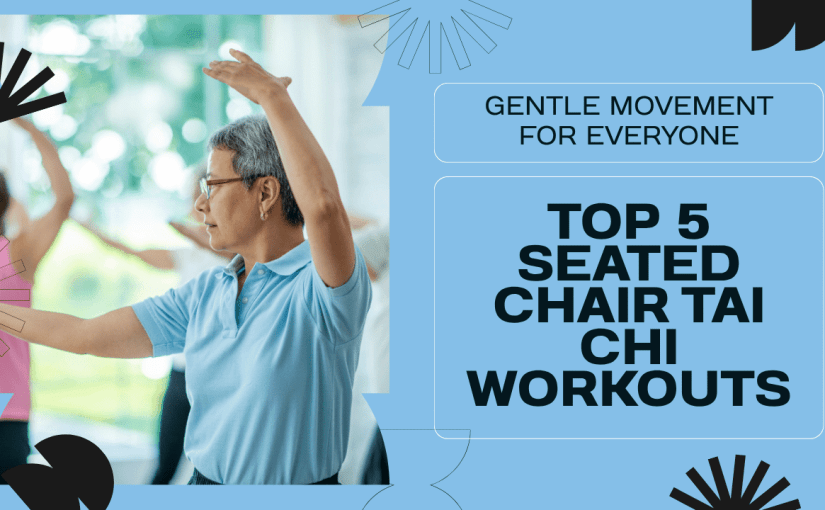
Top Five Seated Chair Tai Chi Practices with teacher Gail Pickens-Barger
🪑 Ease Aches & Pains Through Chair Tai Chi – 44-Minute Seated Class
In this 44-minute seated Tai Chi session, instructor Gail Pickens-Barger leads participants through a series of gentle movements designed to alleviate common aches and pains. The routine focuses on slow, deliberate motions that promote joint mobility, reduce stiffness, and enhance overall well-being.
🌿 Key Highlights: Gentle Movements: Emphasis on slow, controlled motions to enhance joint mobility and reduce stiffness.
Breathing Techniques: Incorporates deep breathing exercises to promote relaxation and oxygenate the body.
Seated Practice: Designed to be performed while seated, making it accessible for individuals with limited mobility.
Pain Relief: Targets common areas of discomfort, such as the back, shoulders, and hips, offering relief through mindful movement.
This session is ideal for seniors or anyone seeking a gentle introduction to Tai Chi, offering a supportive environment to improve physical well-being and reduce discomfort.
🪑 Ease Tension, Stress, and Pain Through Simple Chair Tai Chi – New Year’s Day Practice (47 Minutes)
Start the year with a calming and rejuvenating 47-minute seated Tai Chi session led by Gail Pickens-Barger. This gentle practice is designed to alleviate tension, reduce stress, and ease discomfort, making it ideal for seniors or anyone seeking a mindful movement routine.
🌿 Key Highlights: Gentle Movements: Emphasis on slow, deliberate motions to promote relaxation and flexibility.
Breathing Techniques: Incorporates deep breathing exercises to enhance oxygen flow and calm the mind.
Seated Practice: Performed while seated, ensuring accessibility for individuals with limited mobility.
Mindfulness: Encourages present-moment awareness, fostering a sense of inner peace and well-being.
This session is a perfect way to begin the year with a focus on self-care and holistic health. Whether you’re new to Tai Chi or looking to deepen your practice, this routine offers a gentle introduction to the benefits of mindful movement.
🖐️ Chair Tai Chi Exercises for Hands and Fingers to Ease Aches – 6-Minute Seated Class
In this brief yet effective session, instructor Gail Pickens-Barger leads a 6-minute seated Tai Chi routine specifically designed to alleviate hand and finger discomfort. The exercises focus on gentle movements that promote joint mobility, reduce stiffness, and enhance overall hand function.
🌿 Key Highlights: Gentle Finger Movements: Incorporates slow, deliberate motions to improve dexterity and reduce tension.
Joint Mobilization: Targets key areas such as the wrists and fingers to enhance flexibility.
Breathing Techniques: Emphasizes deep breathing to promote relaxation and increase oxygen flow to the muscles.
Seated Practice: Designed to be performed while seated, making it accessible for individuals with limited mobility.
This session is ideal for seniors or anyone experiencing hand and finger discomfort, offering a quick and effective way to improve hand health and reduce pain.
🪑 Gentle Chair Tai Chi: Boost Mobility & Relieve Aches & Pains – 47-Minute Seated Class
In this 47-minute seated Tai Chi session, instructor Gail Pickens-Barger guides participants through a series of gentle movements designed to enhance mobility and alleviate common aches and pains. The routine emphasizes slow, deliberate motions that promote joint flexibility, improve circulation, and reduce muscle tension.
🌿 Key Highlights: Gentle Movements: Focuses on slow, controlled motions to enhance joint mobility and reduce stiffness.
Breathing Techniques: Incorporates deep breathing exercises to promote relaxation and oxygenate the body.
Seated Practice: Designed to be performed while seated, making it accessible for individuals with limited mobility.
Pain Relief: Targets common areas of discomfort, such as the back, shoulders, and hips, offering relief through mindful movement.
This session is ideal for seniors or anyone seeking a gentle introduction to Tai Chi, offering a supportive environment to improve physical well-being and reduce discomfort.
🪑 Seated Chair Tai Chi & Qigong for Beginners: Gentle Healing Flow with Gail PB Duration: 50 minutes
In this gentle and accessible session, Gail Pickens-Barger leads a seated Tai Chi and Qigong practice designed specifically for beginners. The routine focuses on slow, mindful movements that promote relaxation, improve flexibility, and enhance overall well-being.
Plus to see the full Seated Chair Tai Chi Playlist, I have the following.
Chair Tai Chi & Gentle Beginners Yoga for Back Care Classes
February 2025. For Veterans Yoga Project Online Studio, Gail Pickens-Barger, Yoga Instructor/Chair Tai Chi Instructor. New schedule update.
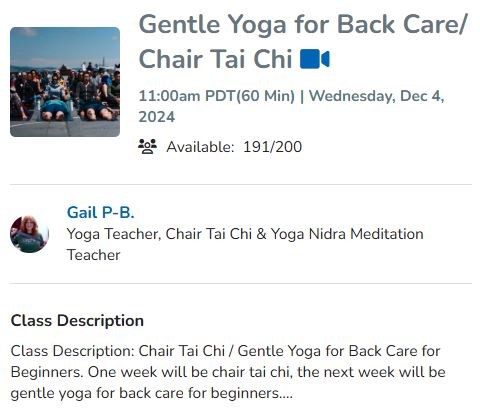
Wednesdays Gentle Yoga for Back Care/ Chair Tai Chi. 11:00am PST(60 min) | Wednesdays | 1:00pm CST(60 min)
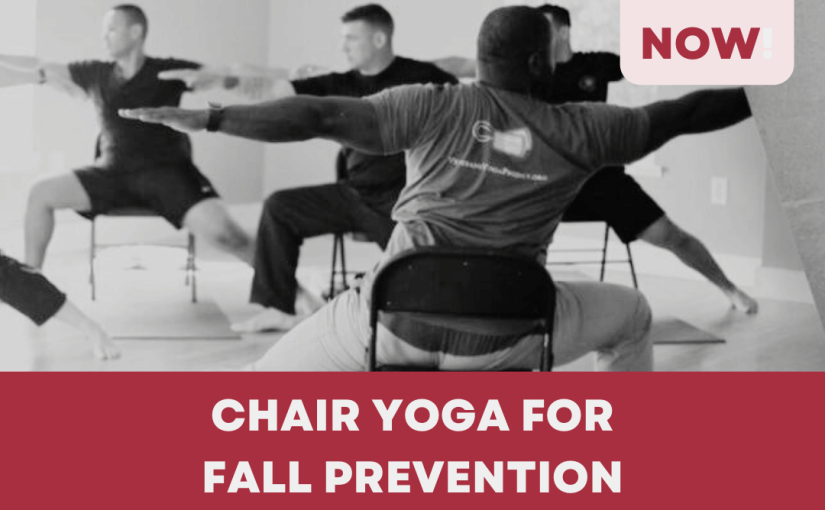
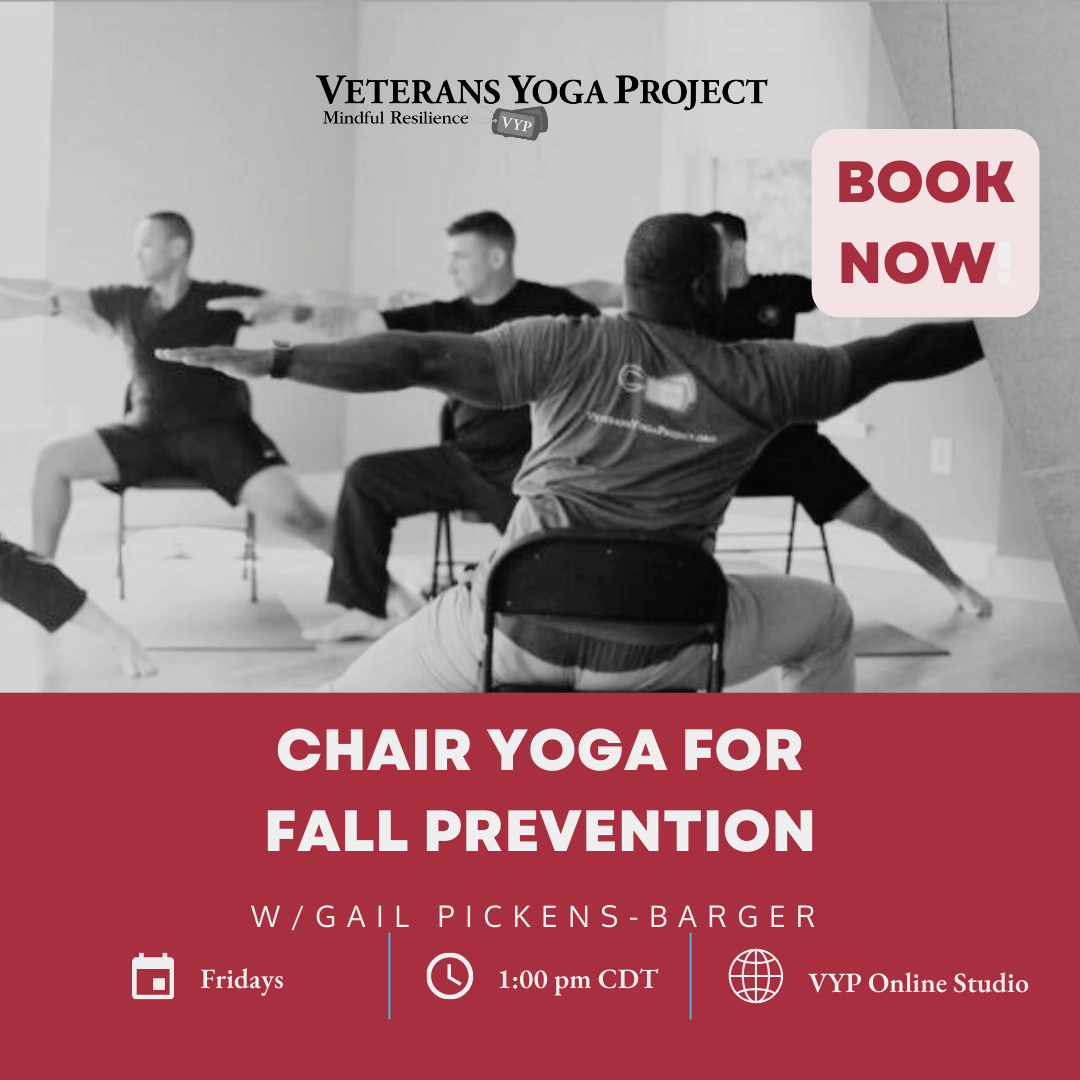
Fridays Chair Yoga for Fall Prevention. 11:00 am PST (60 min) | Fridays | 1:00 pm CST (60 mins)
Gail Pickens-Barger
Yoga Teacher, Chair Tai Chi & Yoga Nidra Meditation Teacher
Class Description: Chair Tai Chi / Gentle Yoga for Back Care for Beginners. One week will be chair tai chi, the next week will be gentle yoga for back care for beginners.
Chair Tai Chi Class Description:
Chair Tai Chi is a 45 minute class, consisting of a blend of Yang Style Tai Chi forms (singled out for adaptability in a seated position), Shaolin muscle and sinew exercises, qigong (“chee-kung”) detoxing techniques, hand/finger/eye exercises, acupressure point stimulation, and guided rest & relaxation & gratitude practice.
Benefits: Chronic pain reduction, improved strength and flexibility, range of motion, posture, blood pressure, sleep, digestion, and immunity. Relieves stress, anxiety, and aids in overall well-being. Chair Tai Chi is a unique therapeutic modality being offered in the online Veterans Yoga Project studio.
*Special instructions for Chair Tai Chi: Please have a sturdy chair available.
*******
Gentle Yoga for Back Care Beginners Class Description:
This 60 minute class is formatted for those of all ages and levels who experience low back pain, whether chronic or due to injury. The use of gear is encouraged to help support you through class which is presented every other week with our resident VYP expert, Gail Pickens-Barger. Class can be done on a yoga mat, or seated on a chair.
Special Instructions Please have on hand: * a strap * a block * access to a non-stick surface (a.k.a. yoga mat) or be seated on a chair
Optional items to have on hand are: * a blanket/cover * access to a wall or chair/table.
You don’t have to bend like a pretzel to do yoga!
Example of Back Yoga for Beginners. Ease your back challenges with simple, effective movements.
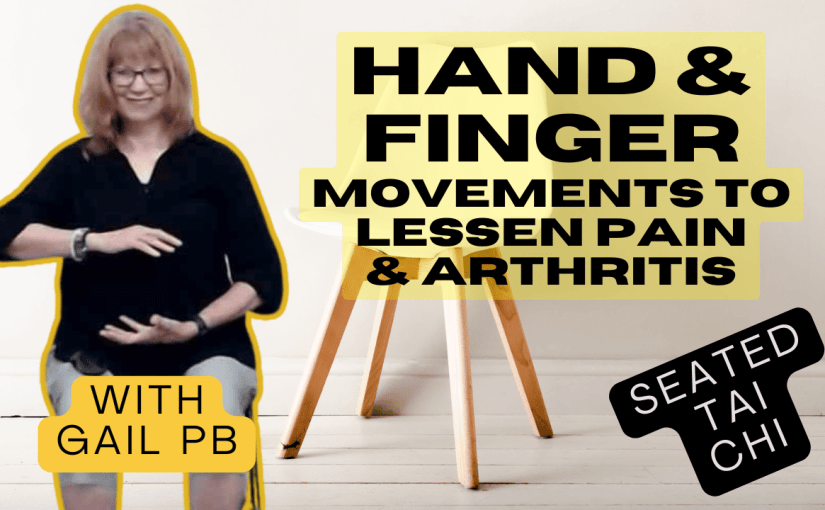
Check out my latest “Live” video. I was testing the video quality and sound at a remote location. Sound is not as crisp as I would like, but is tolerable. Movement sequences for hands and fingers for easing pain and arthritis.
Teaching a new time slot and a new style of class. Starts on Friday, January 17, 2025. Will reside on the online studio platform for Veterans Yoga Project. Chair Yoga for Fall Prevention.
Recently Veterans Affairs, announced its partnership with Veterans Yoga Project to have VYP provide yoga, meditation, Yoga Nidra Meditation practices. The full story can be found here.
The classes provide a no-cost opportunity to Veterans seeking to improve their mental, physical and emotional health through yoga and mindfulness practices.
VA and Veterans Yoga Project are working together to make more Veterans aware of the benefits of yoga while offering more classes. This partnership also provides local VA medical centers with opportunities to connect with Veterans Yoga Project instructors to provide yoga classes and mindful resilience training to Veterans, either in-person or virtually through VA-approved telehealth platforms.
“Through this partnership with Veterans Yoga Project, we are addressing top VA priorities, expanding Veteran access to care and enhancing the overall health of Veterans,” said Kimberly Pugh, health system specialist within VHA National Center for Healthcare Advancement & Partnerships. “Including yoga and mindfulness into their health care routine provides Veterans with additional tools to manage stress, improve physical health and build resilience.”
72% of Veterans saw a reduction in pain
The Veterans Yoga Project is a nonprofit organization that helps Veterans, their families and communities recover and build resilience through yoga and mindfulness training. In 2023, Veterans Yoga Project reported that 75% of Veterans who took part in their programs felt less distress and 72% saw a reduction in pain.
The partnership between VA and Veterans Yoga Project focuses on several key goals:
Teaching Veterans about the benefits of yoga and mindfulness for their mental, physical and emotional health.
Making access to yoga classes and mindful resilience training easier for Veterans.
Encouraging local partnerships between VA medical centers and Veterans Yoga Project instructors.
Offering free yoga and meditation classes to Veterans in their communities.
Classes reduce pain and stress
“Veterans Yoga Project is proud to partner with VA and deliver yoga and mindful resilience practices as a primary service to America’s Veterans,” said Brianna Renner, CEO of Veterans Yoga Project. “As an integral part of VA’s Whole Health initiative, together we have the ability to empower more Veterans to live, thrive and actively belong. With a robust teacher network and over a hundred free yoga classes weekly, we are dedicated to growing the impact of our classes to reduce pain and stress and support as many Veterans as possible.”
This partnership shows VA’s commitment to changing the way health care is delivered to Veterans, focusing on personalized, whole-person care. Yoga is part of VA Whole Health System of Care, which gives Veterans supportive health options.
I teach the Gentle Yoga for Back Care, and alternate that time slot with Chair Tai Chi. Both have been popular with some of the older Veterans.
Now we are hosting a new class, Chair Yoga for Fall Prevention. It is Fridays at 1 PM CDT (think Texas time). Some gear is needed for this class. Two Chairs, a Yoga Strap, a Yoga Block. Optional, if you have a yoga strap with a buckle, or a TheraBand (stretchy strap).
Discover the benefits of yoga without the need to get down on the floor in our Chair Yoga for Fall Prevention class. This gentle and accessible yoga practice is designed to improve balance, flexibility, and strength while keeping you comfortably seated or standing with support.
Our chair yoga practice includes:
Seated Balance Poses: Enhance stability and coordination through modified yoga poses performed while seated.
Gentle Stretching: Increase flexibility and joint mobility with easy-to-follow stretches that reduce stiffness and improve range of motion.
Strength Exercises: Build muscle strength in the core, legs, and upper body to support daily activities and reduce the risk of falls.
Mindful Movements: Boost body awareness and confidence with slow, deliberate movements and guided breathing techniques, all performed with the aid of a chair for safety and comfort.
Perfect for seniors, those with limited mobility, or anyone seeking a low-impact exercise routine. Our skilled instructors will guide you through each pose, ensuring a safe and enjoyable experience. Embrace a healthier, more stable lifestyle with Chair Yoga for Fall Prevention!
More 5 star reviews of Chair Tai Chi on Veterans Yoga project online studio.
BO 5 star review
Absolutely love the new Tai Chi classes with Gail on Wednesdays. We need more classes like this.
RB 5 star review
Gail P.B.- 23 October 2024 Yoga class is simply first rate. Her session of gentle chair tai chi was on mark to decrease stress and pain. It flowed from one movement to another in a delightful way. Fun and effective.
AS 5 star review
Very new to yoga and this was the first exposure to Tai Chi. The new chair Tai Chi with Gail was awesome and was perfect for me. I would love for this to be a regular weekly AM class. Thanks VYP to this exposure.
NH 5 star review
Really enjoyed the chair tai chi class. I feel better and more relaxed after the session.
Here are the October classes for Chair Tai Chi. Grab a free account, and book the class. Next classes are November 6 & 20, 2024.
Plus, this class too!
Introduction to Chair Tai Chi
Overview of the Class
Chair Tai Chi is a 45-minute class designed for veterans, focusing on gentle movements and breath work.
The class begins with a greeting that symbolizes the sun and moon, fostering a sense of community and respect among participants.
Participants are encouraged to become grounded, connecting their bodies to the floor to enhance awareness and stability.
Importance of Grounding
Grounding helps participants shift focus from their minds to their bodies, promoting relaxation and mindfulness.
Physical sensations such as the contraction of quadriceps and awareness of feet pressing into the floor are emphasized to enhance body awareness.
Techniques like wiggling toes and lifting heels are introduced to stimulate circulation and engage lower body muscles.
Overview of Chair Tai Chi
Chair Tai Chi is a gentle form of exercise that combines traditional Tai Chi movements with the support of a chair, making it accessible for individuals with mobility issues.
It focuses on improving flexibility, strength, and balance, while also promoting relaxation and mental clarity.
The practice is beneficial for various populations, including seniors, individuals recovering from injuries, and those with chronic pain conditions.
Regular practice can enhance overall well-being, reduce stress, and improve quality of life.
Benefits of Chair Tai Chi
Enhances physical health by improving muscle strength and joint flexibility, which is crucial for daily activities.
Promotes mental health by reducing anxiety and depression through mindful movement and breathing techniques.
Increases social interaction and community engagement, especially in group settings, fostering a sense of belonging.
Supports bone health through weight-bearing movements that can help prevent osteoporosis.
Breathing Techniques
Dantian Breathing
The dantian, located in the lower abdomen, is a key energy center in Tai Chi practice.
Participants are guided to place their hands on the dantian while practicing deep breathing, expanding the belly on inhalation and contracting on exhalation.
This technique promotes relaxation, reduces stress, and enhances energy flow throughout the body.
Breath Awareness
Emphasis is placed on listening to one’s breath, fostering a deeper connection to the body and mind.
Participants are encouraged to maintain a tall posture, aligning the head with the shoulders to facilitate optimal breathing.
The practice of inhaling and exhaling with awareness helps to calm the nervous system and improve focus.
Movement Practices
Atlas Point Rotation
This movement involves drawing circles with the nose to enhance neck mobility and relieve tension.
Participants are advised to notice any sensations in the neck and adjust their movements to avoid dizziness.
The exercise is performed in both directions to promote balance and flexibility in the neck area.
Swimming Dragon Movement
The Swimming Dragon movement involves coordinated arm and head movements to improve range of motion and reduce neck pain.
Participants are guided to push their hands in one direction while turning their heads in the opposite direction, promoting spinal flexibility.
This movement is beneficial for enhancing coordination and body awareness.
Additional Exercises
Spread the Feathers
This exercise focuses on opening the carotid arteries and improving blood flow to the brain.
Participants extend their arms and turn their thumbs back while dropping their opposite ear towards the shoulder, enhancing neck flexibility.
The movement is repeated on both sides to ensure balanced muscle engagement and relaxation.
Spinning Hands and Shoulder Rotations
Spinning Hands exercise involves rotating the wrists to improve flexibility and reduce tension, particularly beneficial for those with carpal tunnel syndrome.
Shoulder rotations are performed to release tension in the upper back and neck, promoting better posture and muscle strength.
Participants are encouraged to listen to their bodies and adjust movements according to their comfort levels.
Overview of Upper Body Mobility Exercises
Introduction to Mobility Exercises
Mobility exercises are designed to improve the range of motion in joints and enhance overall physical function.
They are particularly beneficial for individuals with limited mobility or those recovering from injuries.
Regular practice can help alleviate discomfort associated with conditions like carpal tunnel syndrome and shoulder stiffness.
These exercises often incorporate breath control, which aids in relaxation and enhances the effectiveness of the movements.
Benefits of Upper Body Mobility Exercises
Improves flexibility and range of motion in the shoulders, wrists, and arms.
Enhances blood circulation, which is crucial for muscle recovery and overall health.
Reduces the risk of injuries by preparing the muscles and joints for more strenuous activities.
Can be performed seated, making them accessible for individuals with mobility challenges.
Detailed Exercise Descriptions
Wild Goose Flutter
This exercise involves extending the arms out to the sides, engaging the fingers, wrists, and arms.
It can be challenging for some due to limited range of motion; modifications can be made by adjusting arm positions.
Incorporating head movements while performing this exercise can enhance coordination and balance.
Great for relieving tension in the wrists and forearms, particularly beneficial for those with repetitive strain injuries.
Stir Arms
The Stir Arms exercise focuses on using the entire arm to create circular motions, promoting shoulder mobility.
Participants can place one hand on their hip or shoulder to stabilize and enhance the movement.
This exercise can produce sounds like ‘snap, crackle, pop’ in the shoulder joint, indicating movement within the joint.
It is important to reverse the direction of the stir to ensure balanced mobility in both directions.
Specific Techniques and Sequences
Kuan Yin Paints the Rainbow
This exercise emphasizes the isolation of the shoulder joint while incorporating breath control.
The sequence involves moving the arm in a sweeping motion, inhaling as the arm rises and exhaling as it moves back behind the body.
It encourages awareness of shoulder movement and can help identify areas of tension or restriction.
The exercise can be performed on both sides to ensure balanced mobility.
Eagle Claw
The Eagle Claw exercise focuses on hand and finger mobility, promoting dexterity and strength.
The sequence includes various movements such as fist to chest, fist to sky, and spreading fingers, which engage different muscle groups.
This exercise can be particularly beneficial for those who spend long hours typing or using handheld devices.
It is important to perform the sequence on both sides to maintain symmetry in strength and flexibility.
Conclusion and Additional Techniques
Blood Pressure Technique
This technique involves specific hand movements that stimulate the heart meridian, promoting cardiovascular health.
The sequence includes inhaling while bringing the elbows back and exhaling while releasing the hands to the sides.
It can help stabilize blood pressure and improve overall heart function.
Regular practice can enhance the effectiveness of the mobility exercises by integrating cardiovascular benefits.
Foot Flex, Point & Pump
This exercise targets the calves and promotes blood flow back to the heart, often referred to as the ‘second heart.’
It involves flexing and pointing the toes, which can be done discreetly while seated.
This technique is particularly useful after meals to help lower blood glucose levels and improve circulation.
Incorporating ankle isolation movements can enhance flexibility and strength in the lower legs.
Introduction to Seated Chair Tai Techniques
Overview of Seated Chair Tai Chi
Seated Chair Tai Chi is a gentle form of exercise that can be performed while sitting, making it accessible for individuals with mobility issues.
Focuses on improving flexibility, strength, and relaxation through various movements and breathing techniques.
Ideal for older adults or those recovering from injuries, as it minimizes strain on the body.
Benefits of Seated Chair Tai Chi
Enhances circulation and promotes better blood flow, which is crucial for overall health.
Strengthens muscles around the knees and improves joint stability, reducing the risk of injury.
Encourages mindfulness and relaxation, helping to alleviate stress and anxiety.
Detailed Movement Techniques
Calf Pumps and Ankle Isolation
Calf pumps involve flexing and pointing the toes to engage the calf muscles and improve ankle mobility.
This exercise can be performed discreetly under a table, making it suitable for office environments.
Noticing differences in tightness between legs can help identify areas needing more attention.
Knee Strengthening Exercises
Exercises include lifting the leg while flexing the heel and pointing the toe to strengthen the knee and surrounding tissues.
Emphasizes the importance of listening to the body and adjusting movements based on comfort levels.
Incorporates acupressure techniques to stimulate the knee area and alleviate discomfort.
Breathing and Relaxation Techniques
Spinal Cord Breathing
Involves seated cat-cow movements to promote spinal flexibility and lung capacity.
Focuses on inhaling to lift the chest and exhaling to curve the spine, engaging the core.
Can be modified for individuals with limited mobility by keeping movements gentle.
Finishing Breath and Energy Flow
The finishing breath technique involves sweeping the arms up and down to balance energy and promote relaxation.
Encourages participants to visualize bringing down energy (‘chi’) to ground themselves after practice.
Integrates mindfulness by focusing on breath and movement synchronization.
Fun and Engaging Movement Activities
Swallow Flies Exercise
This exercise combines arm movements with breathing to enhance coordination and brain function.
Participants extend their arms to the side and then bring them across the body, mimicking the flight of a swallow.
Encourages creativity and fun, making the practice enjoyable and engaging.
Parry Movement Technique
The Parry technique involves circular arm movements that engage both hemispheres of the brain.
Can be likened to the ‘wax on, wax off’ technique from popular culture, promoting muscle memory and coordination.
Incorporates playful elements, such as ‘wiping the table’ or ‘washing windows,’ to keep participants engaged.
Key Movements and Techniques
Wiping Movements
The ‘wiping’ motion involves sweeping movements with the arms, which can help improve shoulder mobility and coordination.
This exercise can be performed in various directions to engage different muscle groups and enhance brain function.
It is important to maintain a relaxed posture while performing these movements to avoid strain.
Elbow Digs and Stomps
Elbow digs involve using the elbows to engage the core and stimulate the brain, promoting better posture and spinal alignment.
Sumo stomps are designed to strengthen the legs and improve bone density, mimicking the action of getting in and out of a car.
These movements can be adjusted in intensity based on individual comfort levels, allowing for personalized practice.
Foot Patterns and Ankle Mobility
Foot Patterns Exercise
The foot patterns exercise involves moving the legs in various directions to enhance coordination and brain function.
Participants are encouraged to focus on the range of motion and control while performing the movements, which can help with balance and stability.
This exercise can also highlight any discrepancies in flexibility between the left and right sides of the body.
Ankle Isolation Techniques
Ankle isolation exercises are crucial for improving walking ability and overall lower body strength.
Movements such as twisting and side-stepping can help increase ankle mobility and prevent injuries.
Participants should pay attention to any sensations in the ankles and adjust movements accordingly to avoid discomfort.
Hand and Arm Exercises
Finger and Hand Mobility
Exercises targeting the fingers and hands can alleviate stiffness and improve dexterity, especially for those with conditions like arthritis.
Techniques include stretching the fingers and tapping the knuckles to enhance circulation and flexibility.
Participants should focus on one finger at a time to ensure proper engagement and avoid overexertion.
Thymus Thump Technique
The thymus thump is a technique aimed at stimulating the thymus gland to boost immune function, particularly in older adults.
This involves tapping on the area just below the collarbone to promote T-cell production, which is vital for immune health.
Regular practice of this technique can contribute to overall wellness and resilience against illness.
Introduction to Lymphatic Drainage
Understanding the Lymphatic System
The lymphatic system is a crucial part of the immune system, responsible for transporting lymph, a fluid containing infection-fighting white blood cells, throughout the body.
Lymph nodes are small, bean-shaped structures that filter lymph and store white blood cells, playing a vital role in the body’s defense against pathogens.
The lymphatic system helps maintain fluid balance in the body and removes waste products from tissues.
Key areas of lymph node concentration include the neck, armpits, and groin, which are often checked by doctors for swelling during illness.
Lymphatic drainage techniques can enhance immune function and promote detoxification by stimulating lymph flow.
The Big Six Lymphatic Drainage Techniques
The ‘Big Six’ refers to six key techniques for stimulating lymphatic drainage, which can be performed daily for optimal health.
Technique 1: Tapping above and below the collarbone to stimulate lymph nodes in the neck area.
Technique 2: Stroking down the sides of the neck to encourage lymph flow from the jawline.
Technique 3: Squeezing the armpit area to activate lymph nodes associated with breast health.
Technique 4: Slapping or tapping the waistline to promote drainage from the abdominal lymph nodes.
Technique 5: Stimulating the back of the knees to enhance lymphatic circulation in the lower body.
Self-Care Techniques for Wellness
Hand Tapping Sequences
Hand tapping is a gentle technique used to relieve various ailments, including headaches and digestive issues.
Technique 1: Tapping the pinky sides to alleviate headaches and vertigo, creating a soothing sound.
Technique 2: Tapping the interwebs of the thumb to aid digestion and reduce nausea, a method often used by caregivers.
Technique 3: Tapping the interwebs of the fingers to relieve pain or numbness in the limbs, ensuring comfort with jewelry.
Technique 4: Stimulating pulse points at the wrist to support heart health, using gentle up-and-down motions.
Breathing and Grounding Exercises
Breathing exercises are essential for relaxation and grounding, promoting mental clarity and emotional balance.
Exercise 1: Belly breathing involves inhaling deeply to expand the abdomen and exhaling slowly to release tension.
Exercise 2: Grounding techniques encourage awareness of the body’s connection to the earth, enhancing stability and calmness.
Exercise 3: Practicing gratitude during breathing exercises can foster a positive mindset and emotional well-being.
Exercise 4: Concluding sessions with a bow of respect reinforces mindfulness and appreciation for self-care practices.
Conclusion and Practice
Integrating Techniques into Daily Life
Regular practice of lymphatic drainage and self-care techniques can significantly improve overall health and well-being.
Setting aside time each day for these practices can enhance immune function and reduce stress levels.
Encouraging mindfulness during these exercises can deepen the benefits and promote a sense of peace.
Consider joining group classes or workshops to learn and practice these techniques with others for motivation.
Documenting progress and experiences can help in understanding the personal benefits of these practices.



 Gentle Yoga and Tai Chi with Gail
You must be logged in to post a comment.